When Should You Schedule a Professional Asbestos Inspection in Ogden, Utah?
Ogden has a character unlike any other city along the Wasatch Front. From the grand Victorian homes in the Jefferson Avenue Historic District and the charming Craftsman bungalows in the Central Bench to the classic mid-century ranch homes lined along the East Bench and throughout South Ogden, our local residential architecture tells a century-long story.
However, homes built before the late 1970s and 1980s often share a hidden feature beneath their historic plaster, vintage floor tiles, and basement pipe wrap: asbestos.
Used widely for decades due to its fire resistance, durability, and insulating properties, asbestos becomes a serious health hazard when disturbed. Inhaling microscopic asbestos fibers can lead to chronic respiratory conditions, asbestosis, and mesothelioma.
If you own or are looking to buy an older property in Ogden, knowing when to test is just as critical as knowing where it hides. Identifying the most important scenarios for scheduling asbestos testing in Ogden, UT ensures your family, your contractors, and your investment remain safe.
1. Prior to Any Major Renovation, Remodel, or Demolition
If you are planning to knock down a wall to create an open-concept living space, remodel a basement, or update a vintage kitchen in North Ogden or Washington Terrace, stop before you pick up a sledgehammer.
Demolition activity directly pulverizes building materials, sending toxic microscopic dust into the air and circulating it through your home's HVAC system.
High-Risk Materials During Remodeling:
Popcorn Ceilings: Extremely common in Ogden homes built between 1950 and 1980.
Vinyl Sheet Flooring & Acoustic Floor Tiles: Often paired with dark mastic adhesive containing high concentrations of asbestos.
Drywall Joint Compound (Mud) & Textured Plaster: Even if the sheetrock itself is clean, the taping compound behind the paint frequently tests positive.
State and federal regulations require a certified asbestos inspection before conducting major structural alterations or pre-demolition work. Testing beforehand lets you factor safe containment or certified abatement into your project schedule and budget.
2. During the Home Buying Process (Real Estate Due Diligence)
Standard home inspections are fantastic for checking a roof's life expectancy or evaluating an electrical panel, but standard home inspectors generally do not collect samples or test for hazardous materials.
If you are putting an offer on an older home near Weber State University or in the historic streets around 25th Street, requesting a specialized asbestos inspection near me during your option period is a smart financial and safety move.
Why Test Before Closing?
Uncover Hidden Expenses: Discovering that an entire basement floor or boiler system contains friable asbestos after closing can mean thousands of dollars in unexpected remediation costs.
Negotiation Leverage: A lab-backed test report allows you to negotiate repair credits, price reductions, or request that the seller complete certified asbestos removal in Ogden, UT prior to closing.
3. After Water Damage, Plumbing Disasters, or Storm Impact
Ogden winters bring heavy snow and freeze-thaw cycles that can cause frozen pipes, basement flooding, or roof leaks. When water saturates older building materials, homeowners often rush to tear out soaked drywall, insulation, and carpet backing to prevent mold.
However, tearing out wet materials without testing can trigger an even bigger environmental issue.
Water-damaged ceiling tiles, plaster, and pipe insulation crumble easily when wet or during rapid drying.
Emergency restoration crews need to know if materials are clear before using industrial air movers, which can otherwise blow hazardous fibers throughout the entire house.
If your home suffers water damage, ask your restoration contractor or a independent inspector for prompt asbestos testing before demolition or drying equipment is turned on.
4. When Heating, Plumbing, or Mechanical Systems Need Upgrades
Many older homes in Ogden's established neighborhoods still feature original gravity furnaces, boiler heating systems, or vintage cast-iron plumbing.
When it comes time to convert an old boiler to modern HVAC or replace aging pipes, mechanical contractors will often refuse to touch the system until an asbestos clearance is provided.
Common Mechanical Sources:
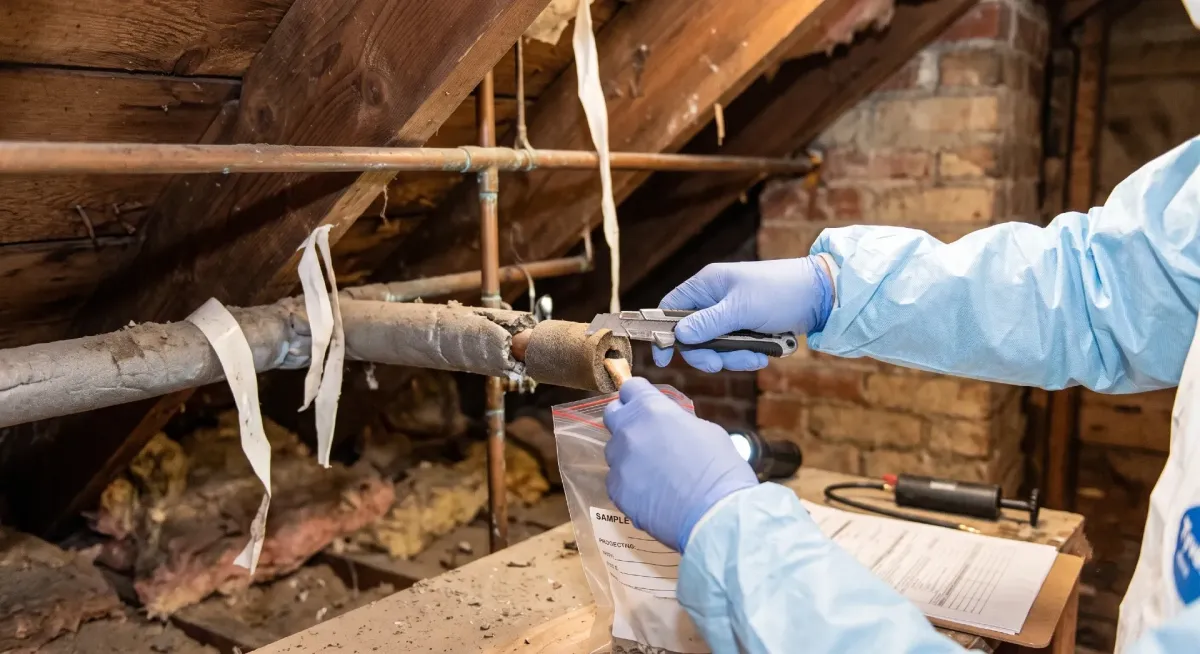
Thermal System Insulation (TSI): White, chalky paper or corrugated cardboard wrap wrapped around basement heat ducts and steam pipes.
Boiler & Furnace Gaskets: Woven asbestos ropes and insulation blankets inside or surrounding older heating units.
Transite Flue Pipes: Cement-asbestos pipes used to vent old water heaters and furnaces through the chimney.
Because thermal pipe insulation is often "friable" (meaning it easily crumbles under light hand pressure), it presents one of the highest exposure risks when handled carelessly.
5. When You Spot Aging, Flaking, or Deteriorating Materials
Asbestos that is intact, undisturbed, and in good condition generally poses very low risk. The danger arises when materials begin to age, degrade, or suffer physical damage.
Take a walk through your basement, attic, or crawlspace. If you notice any of the following, it is time to consult a certified asbestos inspector:
Flaking or fraying white insulation on exposed basement pipes.
Crumbling, pebble-like vermiculite insulation sitting between attic joists (frequently sourced from the historic Libby, Montana mine and contaminated with asbestos).
Water-stained, sagging ceiling tiles or peeling wall plaster.
Cracked or flaking exterior siding made of fiber-cement (Transite).
Common Asbestos Hotspots in Ogden Homes
To help you recognize potential risks in your own property, here is a quick guide to where asbestos most frequently turns up across local architecture:
Home Feature / Material Typical Manufacturing Years Common Location in Home
Popcorn/Spray-Applied Ceilings 1950s – late 1980s Living rooms, bedrooms, hallways
Vermiculite Insulation 1920s – 1990 Attics, wall cavities
9x9 Inch Vinyl Floor Tiles 1940s – late 1970s Basements, kitchens, entryways
Duct Insulation & Tape 1900s – 1980s Basements, crawlspaces, utility rooms
Textured Plaster & Joint Compound Pre-1980 Interior walls and ceilings
Transite Siding & Chimney Flues 1930s – 1970s Home exteriors, furnace venting
What to Do If You Suspect Asbestos
If you suspect a material in your home contains asbestos, follow these fundamental rules:
Don't Disturb It: Do not sweep, vacuum, scrape, sand, or tear down suspect materials. Standard household vacuums will only scatter microscopic fibers into the air.
Hire an Independent Inspector: Look for a state-certified environmental testing firm that specializes in testing without a conflict of interest (i.e., a tester who does not perform abatement themselves).
Review the Lab Results: Samples are analyzed under Polarized Light Microscopy (PLM). Materials containing greater than 1% asbestos are legally classified as Asbestos-Containing Materials (ACM).
Choose Containment or Abatement: Depending on condition and project scope, you may choose to encapsulate (seal) the material or hire a licensed, insured contractor for complete asbestos removal.
Protecting Your Ogden Home's Safety & Value
Ogden's historical homes are part of what makes living along the Wasatch Front so rewarding. Preserving these properties requires a careful balance between modernizing living spaces and respecting legacy building materials.
By scheduling professional asbestos testing in Ogden, UT prior to remodeling, buying, or repairing your property, you protect your family's health and ensure your home improvements are built on a safe foundation.
